January 27, 2026 · 11 min read

After 25 Years of Success, Life Threw Me a Curveball. Here's What Actually Worked.
I have lost over 550 pounds in my life. The problem was that I also had a special gift for gaining it back.
If you've followed my work through my book Lose Weight for Good or any of my coaching programs, you know my story. By my mid-thirties, I was over 400 pounds, pre-diabetic, and standing in my doctor's waiting room because I couldn't fit in the chairs. I went on to lose over 200 pounds and keep it off for more than 25 years.
I've written books about it. I've developed programs. I've coached hundreds of people through their own transformations. I became what you might call an expert.
And then, recently, something happened that surprised even me.
The Expert Gets Humbled
I experienced stress-related weight gain for the first time in 25 years.
I won't bore you with the details of what caused it. Life happens. Stress accumulates. Old patterns resurface. What matters is this: even after all my success, all my knowledge, all my experience coaching others, I found myself slipping.
The weight crept back. Not all of it, thank goodness, but enough to notice. Enough to worry me. Enough to make me wonder if everything I'd learned was somehow not enough.
Here's what I discovered: I still knew exactly what to do. I just wasn't doing it.
Sound familiar?
The ONE Thing That Made the Difference
So what got me back on track? What single strategy pulled me out of that slide faster than anything else?
Accountability.
That's it. Not a new diet. Not a fancy supplement. Not some revolutionary workout. Just accountability.
I started logging my food again. Every single thing. Before I ate it.
Now, you might be thinking, "That's it? That's the big secret?" And I get it. Food logging sounds boring. It sounds tedious. It sounds like something you've tried a hundred times before.
But here's what I've learned from over two decades of coaching people through weight loss: of all the strategies I've used, of all the techniques I've taught, accountability through food logging is the single most effective way to get the quick start people need.
Not exercise (though that matters). Not meal planning (though that helps). Not meditation or affirmations or any of the other tools in my toolkit.
Accountability. Plain and simple.
The Science Behind Why This Works
Let me put on my clinical hat for a moment and explain what's actually happening in your brain when you practice accountability.
The Awareness Formula
In my book, I introduce what I call the Awareness Formula:
A = (Q × f)^I
Where:
A = Awareness
Q = Quality of the questions you ask yourself
f = Frequency of asking those questions
I = Integrity (the power of brutal honesty in your answers)
Awareness comes from asking yourself high-quality questions, asking them frequently, and then having the integrity to answer truthfully.
When you log your food before eating it, you're forced to ask: "What am I about to eat?" That simple question, asked every time you eat, with honest answers, creates profound awareness.
The Research on Self-Monitoring
A landmark 2009 study tracked 1,600 obese people who were asked to write down everything they ate at least one day per week. Just one day. No diet requirements. Just awareness.
The results? People who kept daily food records lost twice as much weight as everyone else.
Not a little more. Twice as much.
That's the power of accountability.
Quick Wins and the "I Can Do This" Operating System
Here's something most people don't understand about behavior change: your brain needs proof that you're capable before it will fully commit to change.
Carol Dweck's groundbreaking research on growth mindset shows that our beliefs about our abilities directly affect our outcomes. If you believe you can change, you're more likely to persist through difficulties. If you believe you're stuck, you'll quit at the first setback.
The problem is that you can't just decide to believe in yourself. You need evidence. You need quick wins.
When you successfully log your food for a day, then two days, then a week, you're installing what I call the most important belief update in your mental operating system:
"I can do this."
Not "I can lose 50 pounds." Not "I can transform my entire life." Just "I can do this one small thing."
That belief becomes the foundation for everything else. And, when you lose weight (which you will if you commit to this) then that's even more proof.
Albert Bandura, the father of self-efficacy research, demonstrated that the strongest source of self-belief is mastery experiences. Doing something successfully, even something small, builds the confidence to tackle bigger challenges.
Food logging is the perfect mastery experience. It's concrete. It's measurable. It's achievable. And every day you do it, you're proving to yourself that change is possible.
Why AI Just Changed the Game
Now here's where it gets exciting.
I've been teaching food logging for decades. And the biggest complaint I always hear is: "It's too tedious. It takes too long. I forget to do it."
Fair points. Traditional food logging required carrying a notebook everywhere, looking up calories and portions, entering data into apps manually. It was a hassle.
But AI has completely changed this.
Using tools like Google Gemini, you can now log your food through natural conversation. Just tell it what you ate like you're talking to a friend. The AI does the heavy lifting of calculating portions, looking up nutritional information, and even posting it directly to your calendar so you have a visual record.
Let me show you exactly how to set this up.
How to Create Your AI Food Logging System with Google Gemini
Step 1: Create Your Custom Gem
Google Gemini allows you to create custom "Gems," which are specialized AI assistants with specific instructions. Here's how to set up your food logging Gem:
- Go to gemini.google.com
- Click on "Gem manager" in the left sidebar
- Click "New Gem"
- Name it something like "Food Logger" or "My Nutrition Buddy"
Step 2: Configure Your Gem with These Instructions
In the "Instructions" field, paste the following (feel free to customize):
You are my personal food logging assistant. Your job is to help me maintain awareness of what I eat by logging every meal and snack.
When I tell you what I ate:
1. Acknowledge the food with a friendly, non-judgmental response
2. Estimate reasonable portions if I don't specify
3. Note the approximate calories and key macros (protein, carbs, fat)
4. Ask me to rate my hunger before eating on a scale of 1-10
5. Ask how I was feeling emotionally before eating (optional)
6. Format the log entry for my Google Calendar
Always be supportive and never critical. The goal is awareness, not judgment.
If I ate something that might not align with health goals, do NOT lecture me. Simply log it and move on. Shame does not help. Awareness does.
When I say "food log" or similar, format the entry like this on the date and time specified (If not specified, assume it's right now):
Title: FOOD LOG - [Total Cal]
In Notes: - [Food items with portions] - Estimated calories: [number] - Hunger level: [1-10] - Mood: [if provided]
End each interaction by reminding me: "Remember, you're building awareness. That's the work."
Step 3: Connect to Google Calendar
Gemini can connect directly to your Google Calendar, making this process seamless:
- In Gemini, click on "Settings" (gear icon)
- Go to "Extensions" and enable "Google Workspace"
- Grant Gemini permission to access your Google Calendar
- Now when you log food with your Gem, simply say: "Add this to my calendar at 12:30pm today"
- Gemini will create the calendar event automatically with all your food log details
You can even say things like:
- "Log this breakfast and add it to my calendar"
- "Create a food log event for what I just told you"
- "Put this lunch on my calendar for noon"
The integration means you go from telling Gemini what you ate to having it on your calendar in one conversation. No copying, no switching apps, no friction.
Step 4: Create a Daily Review Habit
At the end of each day, open your calendar and review your food logs. Look for patterns:
- When did you eat?
- How hungry were you really?
- What emotions showed up?
- Any surprises?
Bonus Points: Share with a Friend or Coach
Here's where accountability gets supercharged.
Research on social accountability shows that sharing your commitments with others dramatically increases follow-through. When you know someone else is watching, you try harder. It's human nature.
Option 1: Screenshot and Share At the end of each day, screenshot your calendar view showing your food logs. Text it to a friend, family member, or coach. No commentary needed. Just the visual proof that you showed up.
Option 2: Create an Accountability Partnership Find a friend who also wants to build awareness around eating. Agree to share daily food logs with each other. You don't need to critique each other's choices. Just witnessing is enough.
Option 3: Work with a Coach If you're serious about change, consider working with a coach who can review your logs and help you spot patterns. The investment in accountability often pays for itself many times over.
Bonus Points: Add Physical Activity
Once you've got food logging working, extend the system to physical activity.
Ask your Gem to also log:
- What activity you did
- How long
- How you felt during and after
- Rate your energy level
The National Weight Control Registry, which tracks people who have successfully maintained significant weight loss, found that successful maintainers average 60-90 minutes of physical activity daily. Logging creates awareness. Awareness enables change.
A Word About Self-Compassion (Please Read This)
Here's something I need to tell you, and it's important.
It took me weeks to get back on track with this. Weeks.
Even though I'm the expert. Even though I've taught this for decades. Even though I literally wrote the book on losing weight for good.
I still struggled to do what I knew I should do.
Dr. Kristin Neff's research on self-compassion has fundamentally changed how I think about behavior change. Her work shows that harsh self-criticism actually de-motivates people. When you beat yourself up for slipping, you trigger shame, and shame leads to avoidance and giving up.
Self-compassion has three components:
- Self-kindness instead of self-judgment
- Common humanity instead of isolation (recognizing that struggle is part of being human)
- Mindfulness instead of over-identification with negative emotions
The research is stunning: self-compassion predicts whether people will persist after setbacks. In one study, 85% showed significant improvements in eating behaviors when they practiced self-compassion.
So when you miss a day of logging, here's what I want you to do:
- Acknowledge it happened: "I didn't log my food today."
- Recognize you're human: "This is hard. Everyone struggles with this."
- Offer yourself kindness: "I can start again right now. Missing one day, or one meal, doesn't define me."
Then start again.
Not tomorrow. Not Monday. Right now.
The real trick to being successful isn't not failing. It's being able to use that failure to learn how to do it better. Just simply start again.
Your Commitment
I want to invite you to try this for seven days.
Just seven days.
Log everything you eat, using your AI assistant to make it easy. Post it to your calendar. Review it at the end of each day.
No restrictions. No judgment. Just awareness.
Log everything. Don't torpedo this by creating special exceptions.
If you want bonus points, share with a friend. Add your physical activity. But at minimum, just log the food.
Here's what I predict will happen:
You'll discover patterns you never knew existed. You'll find yourself making different choices, not because you're forcing yourself, but because awareness naturally shifts behavior. And most importantly, you'll start to believe that you can do this.
That belief is everything.
The Bottom Line
After 25 years of maintaining weight loss and working with hundreds of clients, I can tell you this with certainty: accountability works.
It's not sexy. It's not revolutionary. It doesn't sell books or get clicks.
But it works.
AI has made it easier than ever. You can literally talk to your phone about what you ate and have it logged in seconds. The friction is gone.
The only question left is: will you start?
Remember Buddha's wisdom: "A jug fills drop by drop."
One meal logged. One day of awareness. One small proof that you can do this.
That's all it takes to begin.
Results May Vary
Your results with AI may vary, but if you are patient, you can create a really cool tool.
There are also some great APPs for your phone, and you can always use pen and paper.
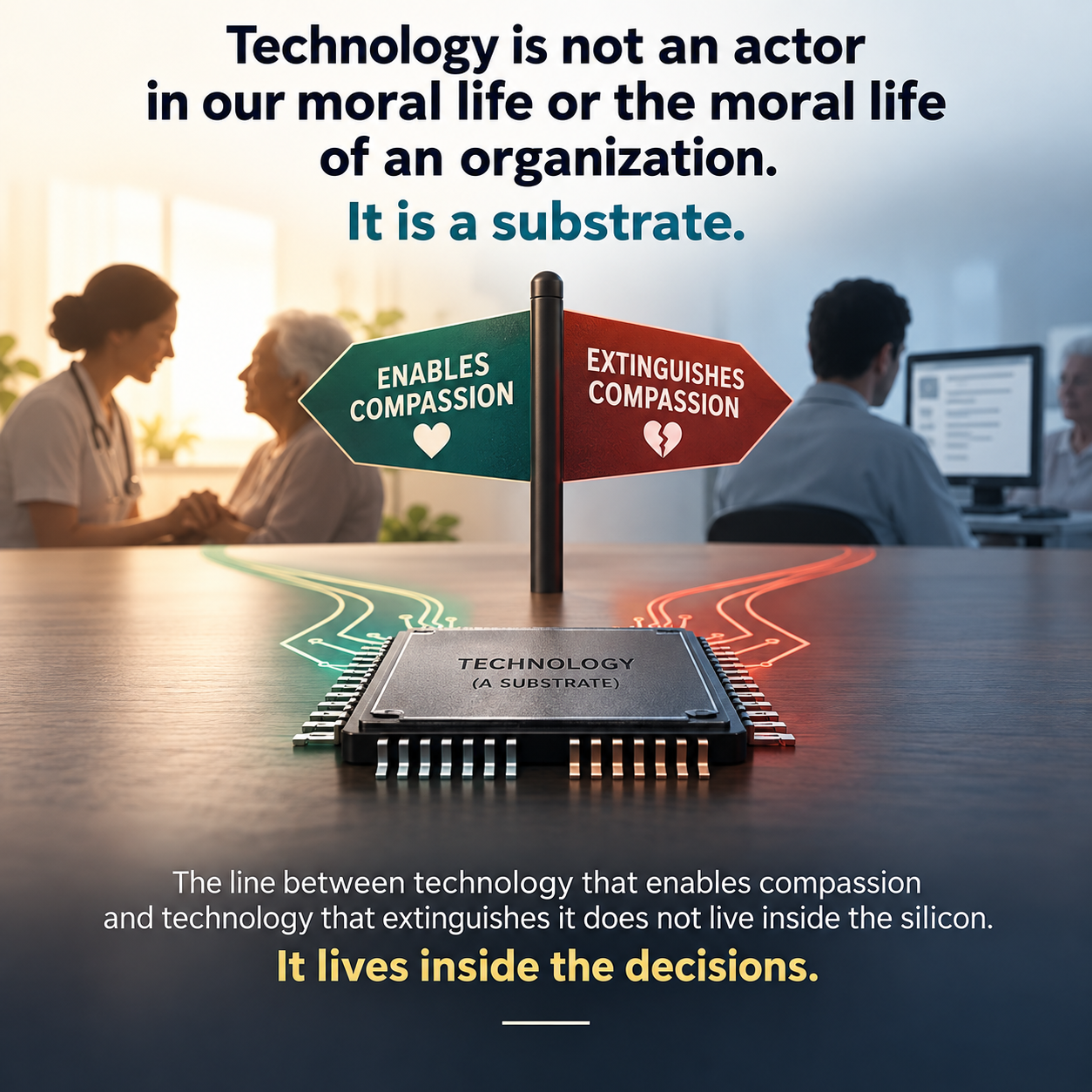
The key is not the tech. It's the accountability and the removal of friction between you and it that will carry you to success.
Dr. Russ L'HommeDieu is a Doctor of Physical Therapy, behavior change specialist, and author of Lose Weight for Good. After losing over 200 pounds and maintaining that loss for over 25 years, he now teaches at the university level and consults with healthcare technology companies. He lives in Apollo Beach, Florida with his wife Karen and their three-legged rescue dog Daisy.
For more on self-compassion research, see Dr. Kristin Neff's groundbreaking book "Self-Compassion: The Proven Power of Being Kind to Yourself."